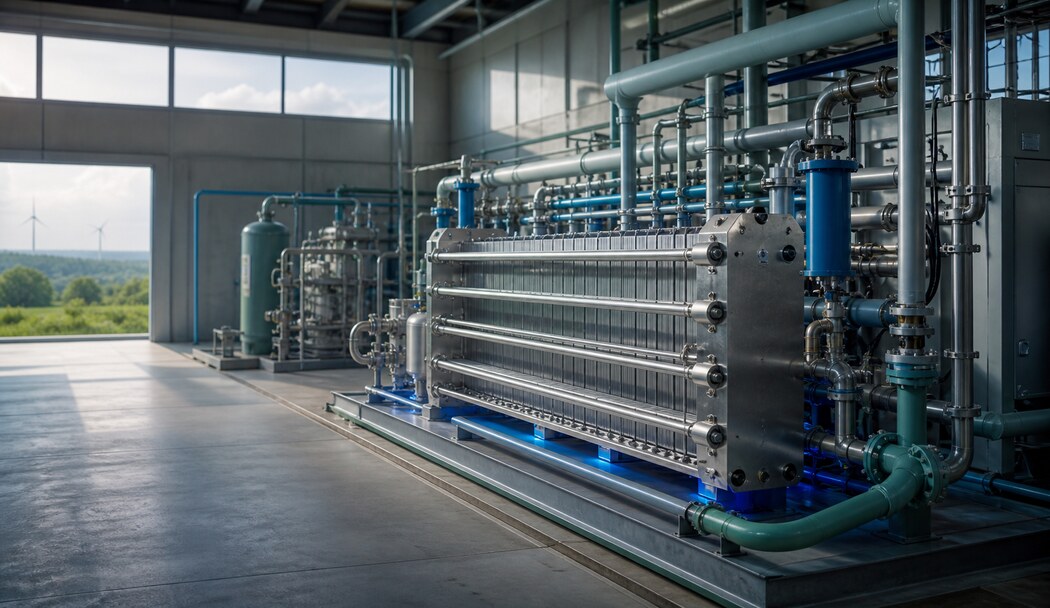
Efficiency is not one number. It is a chain from electricity input to usable hydrogen, shaped by loading, balance of plant and replacement timing.
Start with the boundary
A useful efficiency statement names what it includes. A stack figure may exclude compression, water treatment, cooling and the control systems that keep production stable. A project comparison becomes clearer when the boundary is written before any percentage is compared. The reader can then see whether two values describe the same object or merely share a unit.
Capacity factor changes the story
An electrolyzer that runs only when power is available may have a different annual cost profile from one supplied by a steadier source. Utilisation affects how fixed equipment is spread across output, while flexible operation can support a constrained grid or a renewable portfolio. The relevant question is not whether high utilisation is always best, but which operating pattern the project can defend.
Lifetime belongs in the metric
Degradation and replacement timing connect technical performance to finance. A simple worksheet should keep initial efficiency, expected drift, planned maintenance and replacement assumptions visible. If those inputs are hidden inside one headline figure, a reader cannot tell whether a lower first-year energy use still produces the better long-run result.
Continue the reading
This desk treats hydrogen as a connected system. Read the Hydrogen Systems Field Guide for the wider map, or browse the Hydrogen Systems topic index to compare adjacent questions.